Echallan Parivahan: What It Is and How to Use It
An e-challan is a digitally generated traffic fine issued under India’s Motor Vehicles Act of 1988. This system was launched by the Ministry of Road Transport and Highways in 2016 to replace the traditional manual challans. The aim was to make the process of issuing and paying traffic fines more efficient.
Developed by the National Informatics Centre, this platform simplifies the tracking and resolution of traffic fines. It allows users to check challan details using their vehicle number, driving license number, or unique challan number. This is crucial as India records over 8 crore traffic challans annually.
Timely compliance with these fines is essential to avoid further penalties. Understanding how to enter vehicle information can help drivers manage their traffic fines effectively. With the rise of digital solutions, staying informed has never been easier.
Understanding the e-Challan System in India
The e-Challan system revolutionizes how traffic fines are issued in India. This digital approach enhances efficiency and transparency in managing traffic violations. With the help of advanced technologies like CCTV cameras, speed detection systems, and AI surveillance, road-rule violations are identified swiftly.
Unlike traditional paper-based challans, which often involve cumbersome processes, the e-Challan system offers several advantages. Notifications about violations are sent promptly through SMS, online portals, or mobile applications, ensuring drivers stay informed.
| Feature | e-Challan System | Traditional Paper Challans |
|---|---|---|
| Issuance Method | Automated and manual | Manual only |
| Notification Speed | Instant (SMS/Apps) | Delayed (Paper notices) |
| Payment Options | UPI, Net Banking, Cards | Limited options |
| Record Keeping | Digital records | Paper records |
This shift not only simplifies the payment process but also encourages timely compliance with fines. Overall, the e-Challan system represents a significant step forward in traffic management in India.
The Evolution: From Paper-Based to Digital Challans

In 2016, India witnessed a significant shift in traffic fine management with the introduction of a digital system. This transition marked a move away from traditional paper-based notices, which often caused delays and confusion.
The National Informatics Centre developed this innovative platform to streamline the issuance and payment of fines. By centralizing electronic records, the system reduced manual processing time, allowing for quicker access to violation information.
Moreover, the digital delivery of fines supports timely compliance. Previously, motorists relied on physical documents, which could be easily misplaced or forgotten. This evolution not only enhances consistency and transparency but also boosts administrative efficiency.
echallan parivahan: Streamlining Traffic Fine Management
The integration of technology has transformed traffic fine management in India. Automated systems are now used to capture real-time traffic offences through CCTV surveillance and speed detectors. These technologies allow for immediate identification of violations, making the process more efficient.
When a vehicle is caught violating traffic rules, its registration number is matched against the records stored at the RTO. This helps in identifying the responsible vehicle owner quickly. Accurate mobile and email details are essential for sending prompt notifications about violations to the registered owner.
This integration reduces manual errors during traffic enforcement. Centralized records also simplify the review of vehicle compliance, insurance, and payment information. As a result, both authorities and vehicle owners benefit from a more organized and transparent system.
Step-by-Step Guide for Checking Your Traffic Challan
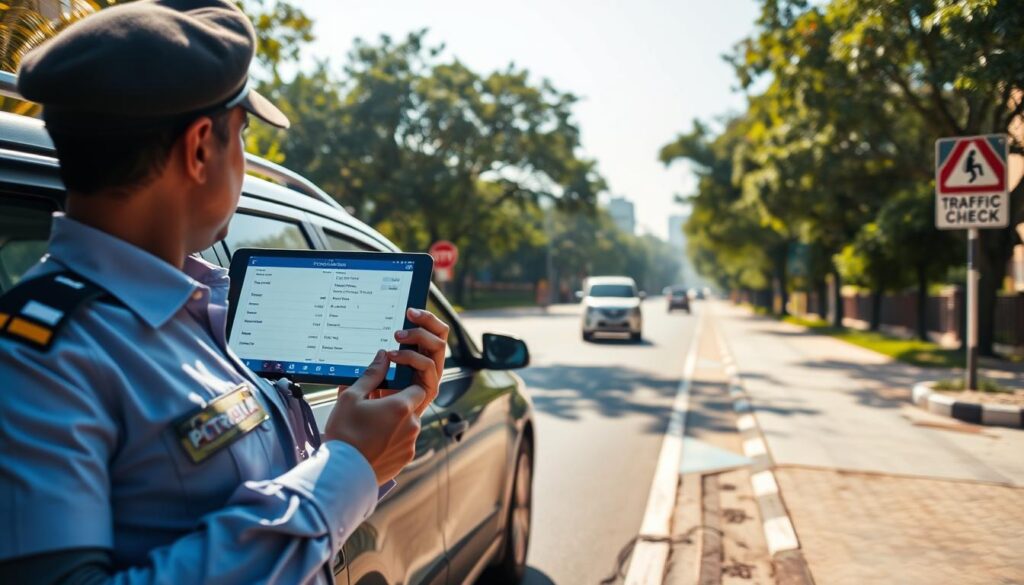
Checking your traffic challan is now easier than ever. Follow these simple steps to access your fine details online.
Navigating the Portal
Start by visiting the official website. From the Online Services menu, select the e-Challan option. Here, you can enter either your challan number, vehicle number, or driving license number. Completing the captcha verification is essential before clicking the Get Detail button.
Utilizing Third-Party Applications
For additional convenience, consider using third-party applications like Cars24. Users can input their vehicle registration number and verify their access through a mobile OTP. This option offers a quick way to check your fines.
Always review the official records carefully before authorizing any payments. Ensuring accuracy helps avoid unnecessary complications.
| Step | Action | Details |
|---|---|---|
| 1 | Visit Website | Go to the official traffic fine portal. |
| 2 | Select e-Challan | Choose the e-Challan option from the menu. |
| 3 | Enter Details | Input challan number, vehicle number, or license number. |
| 4 | Complete Captcha | Verify your input through captcha. |
| 5 | Check Details | Click Get Detail to view your traffic challan. |
How to Use Vehicle Registration Details for Challan Checks
To effectively check your traffic fines, accurate vehicle registration details are essential. Users must ensure that the complete vehicle registration number matches the format recorded by the RTO. This includes checking letters, digits, spacing, and state identifiers before submitting a search.
Incorrect vehicle or driving license details can prevent recent challans from appearing. This means that valid records may remain hidden if the information entered is not precise. Alternatively, users can search using a challan number or driving license number if needed.
It is also important to note that recently issued violations may take time to appear in the system. Processing is not always immediate, so patience is key when checking for new traffic fines.
Paying Your Traffic Fines Securely Online

Motorists can now pay their traffic fines online with ease and security. The digital platforms support various payment methods, making it convenient for users to settle their fines promptly. Options include UPI, net banking, debit cards, and credit cards. This flexibility allows individuals to choose the method that suits them best.
After completing a payment, it is essential to download the receipt from Cars24, which includes a transaction ID. This receipt serves as proof of payment and is crucial for any future reference. If a payment fails, users should check their bank statements before attempting to pay again. It is advisable to wait one to three working days for the payment status to update on the portal.
To avoid duplicate payments, motorists should retain their payment records. Keeping these records helps in resolving any disputes that may arise regarding the fines. By following these steps, individuals can ensure a smooth and secure payment experience.
| Payment Method | Security Features | Transaction Time |
|---|---|---|
| UPI | Encrypted transactions | Instant |
| Net Banking | Two-factor authentication | Instant |
| Debit/Credit Cards | Secure payment gateways | Instant |
Common Traffic Violations and Their Penalties
Traffic violations in India come with significant penalties that every driver should be aware of. Understanding these penalties can help promote safer driving habits and compliance with the law.
Here’s a brief overview of some common offences and their corresponding fines:
- Driving without a valid licence: ₹5,000 and possibly up to three months’ imprisonment.
- Drunk driving: ₹10,000 and/or six months’ imprisonment for a first offence.
- Driving without insurance: ₹2,000 and/or three months’ imprisonment.
- Helmet non-compliance: ₹1,000 and a three-month licence suspension.
- Signal jumping, overspeeding, and phone use while driving: Updated penalties of ₹5,000 each.
It is important to note that penalties can vary based on the type of offence, vehicle, state implementation, and whether it is a repeat violation. Staying informed can help drivers avoid these costly mistakes.
| Offence | Penalty |
|---|---|
| Driving without a valid licence | ₹5,000 / Up to 3 months imprisonment |
| Drunk driving | ₹10,000 / 6 months imprisonment |
| Driving without insurance | ₹2,000 / 3 months imprisonment |
| Helmet non-compliance | ₹1,000 / 3 months licence suspension |
| Signal jumping, overspeeding, phone use | ₹5,000 |
Detailed Process for e-Challan Status Verification

Understanding the verification process for traffic fines is crucial for every vehicle owner. To effectively manage traffic fines, users should familiarize themselves with the different statuses of their challan records. This includes the unique challan number, vehicle registration number, violation date, time, location, amount due, and payment status.
Here are the key statuses you may encounter:
- Pending: The fine remains unpaid.
- Paid: Payment succeeded.
- Under Review: The violation is being verified.
- Disputed: A complaint has been raised regarding the fine.
- Sent to Court: The matter must be settled through court procedures.
By comparing the violation date, time, location, amount due, and vehicle registration information, users can distinguish between multiple records linked to one vehicle. A unique challan number is essential for identifying specific fines.
Remember, “Paid” confirms successful payment, while “Pending” indicates that settlement remains incomplete. Users are advised to download records of paid fines and investigate any discrepancies before closing the portal.
| Status | Description |
|---|---|
| Pending | Fine remains unpaid |
| Paid | Payment succeeded |
| Under Review | Violation is being verified |
| Disputed | Complaint has been raised |
| Sent to Court | Must be settled through court |
Benefits of Using e-Challan Portals for Timely Compliance
Utilizing digital portals for traffic fine management offers numerous advantages. These systems significantly reduce paperwork and the need for manual intervention. By using online services, vehicle owners can easily access their challan records and payment history.
One of the key benefits is the ability to check e-challan status quickly. This transparency helps in maintaining accurate records of violations. Moreover, timely compliance can prevent complications during vehicle transfers or resales.
Additionally, the convenience of online payments eliminates the need to stand in long queues. Regularly reviewing pending traffic challans ensures better administrative compliance. With clear digital records, disputes regarding issued violations and completed payments are minimized.
Overall, these services empower vehicle owners to manage their responsibilities efficiently. They can simply enter vehicle number or use their registration details to stay informed about any pending fines.
Navigating Through Government and Third-Party Portals

Navigating the world of traffic fines has become more straightforward with various digital platforms. Vehicle owners can utilize both official government channels and third-party applications to manage their fines effectively.
Available channels include Parivahan, NextGen mParivahan, state traffic portals, and third-party platforms like ACKO, Cars24, and Policybazaar. Each option offers unique features and benefits for users.
Comparison of Official Sites with Apps like ACKO
For instance, ACKO reports over 50,000 daily challan checks using government-verified data refreshed every 24 hours. This ensures that users receive the most accurate information available. On the other hand, Cars24 combines vehicle searches, mobile OTP access, payment, and digital receipt storage for a seamless experience.
While official government portals serve as the primary source for verification and dispute handling, users should exercise caution. It is advisable to review privacy, authentication, and payment details before using any third-party application.
| Platform | Type | Features |
|---|---|---|
| Parivahan | Government | Official verification, dispute handling |
| NextGen mParivahan | Government | Mobile access, traffic fine management |
| ACKO | Third-Party | Daily challan checks, verified data |
| Cars24 | Third-Party | Online payment, receipt storage |
Virtual Courts and Their Role in Resolving e-Challans
Virtual Courts are a modern solution introduced by the Government of India to streamline traffic case resolutions. These platforms allow eligible traffic cases to be handled without the need for physical court visits, making the legal process more accessible.
Users can easily select their state traffic department and enter relevant challan or vehicle information. This straightforward approach helps in quickly addressing traffic violations.
Once the details are entered, users have the option to pay the fine digitally or select “I wish to contest the case,” where applicable. This flexibility empowers individuals to manage their traffic fines effectively.
The process involves captcha verification, record review, and online resolution. After the case is resolved, users can download an acknowledgment receipt for their records. It is important to note that court-forwarded matters may require following specific directions outlined in the notice.
| Step | Action | Details |
|---|---|---|
| 1 | Select State | Choose the applicable state traffic department. |
| 2 | Enter Information | Input challan or vehicle details. |
| 3 | Choose Action | Pay the fine or contest the case. |
| 4 | Verify | Complete captcha verification. |
| 5 | Download Receipt | Obtain acknowledgment after resolution. |
Trends and Data: Insights on Traffic Violations in India
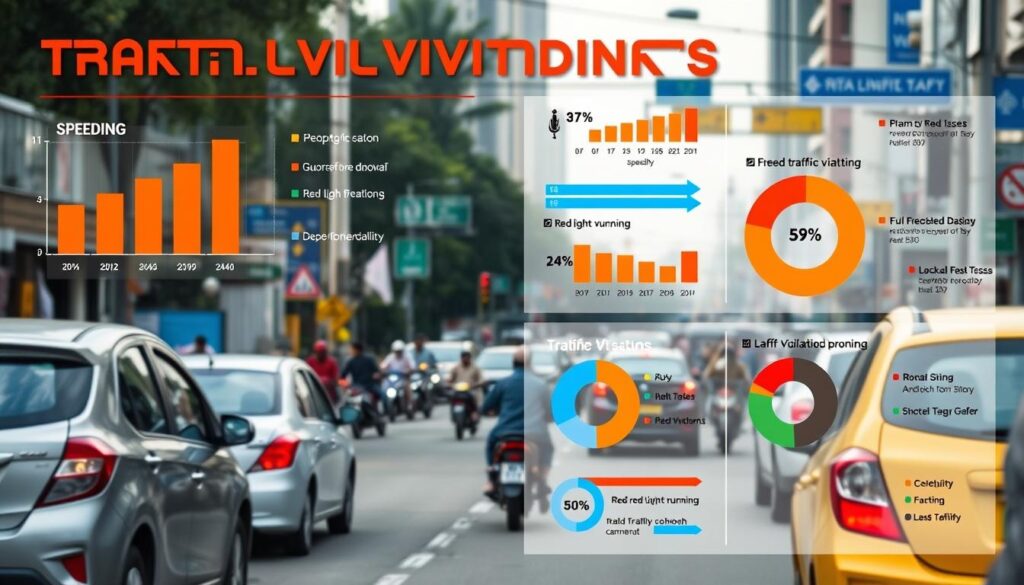
Recent trends in traffic violations reveal critical insights for Indian motorists. A report by ACKO for 2025 highlighted that more than 10.5 million helmet offences were recorded. This alarming statistic shows that helmet violations accounted for 34.8% of all recorded violations.
Furthermore, Bengaluru stands out with the highest share of drivers facing challenges, where 10.8% of motorists have more than ten pending challans. This indicates a significant compliance issue in the region.
Chennai also shows notable activity, with an average of 5.02 challan checks per driver each month. The cities of Kolkata, Ahmedabad, Delhi, and Mumbai also appeared frequently in the monthly-check leaderboard.
| City | Pending Challans (%) | Average Checks per Driver |
|---|---|---|
| Bengaluru | 10.8% | Varies |
| Chennai | Varies | 5.02 |
| Kolkata | Varies | Varies |
| Ahemdabad | Varies | Varies |
| Delhi | Varies | Varies |
| Mumbai | Varies | Varies |
Preventing Common Payment Errors and Transaction Issues
Many users encounter challenges when attempting to settle their traffic fines online. Understanding how to avoid common payment errors can make this process smoother.
After a failed transaction, it’s crucial to wait one to three working days before trying again. This waiting period allows the system to update and prevents duplicate payments.
Always check your bank statement to confirm whether the funds were debited. If the amount is deducted but the challan remains unpaid, contact your bank or the payment gateway for assistance.
If you face ongoing issues, you can raise a grievance through the e-Challan portal. Select the Grievance option, upload necessary evidence, and record your ticket number for future reference.
Remember, it’s essential to avoid making duplicate payments while the issue is unresolved. This precaution helps prevent unnecessary complications with your pending challans.
Road Safety Tips to Avoid Unnecessary e-Challans

Practicing safe driving habits can significantly reduce the chances of receiving traffic fines. Following essential road safety tips is crucial for every driver. By being proactive, individuals can navigate the roads more safely and avoid penalties.
Practical Advice for Safe and Compliant Driving
- Wear an ISI-marked helmet and seatbelt: These measures are vital for both legal compliance and personal safety.
- Obey traffic signals: Always stop at red lights and follow the rules to stay in your lane.
- Avoid overspeeding: Driving too fast increases the risk of accidents and may lead to fines.
- Limit mobile phone use: Distracted driving is dangerous and can trigger enforcement actions.
- Never drink and drive: Alcohol impairs reflexes and puts everyone on the road at risk.
- Carry required documents: Always have your driving licence, insurance papers, RC, PUC certificate, and fitness certificate when driving.
Integrating e-Challan Management with Vehicle Maintenance Practices
Integrating e-challan management into regular vehicle maintenance is essential for every driver. Regular reviews of outstanding traffic fines can prevent complications during vehicle transfers or resales. Unpaid challans may create problems during document verification and RC renewal.
Vehicle owners should maintain valid insurance, PUC certification, registration, and fitness documentation. Keeping these records organized not only aids in compliance management but also simplifies future transactions.
Before purchasing a used vehicle, it is advisable to check the seller’s records. This helps identify any unexpected financial liabilities linked to unpaid fines. By maintaining organized digital receipts and documentation, vehicle owners can ensure a smoother verification process during ownership changes.
| Practice | Benefit | Impact of Neglect |
|---|---|---|
| Regular Fine Checks | Prevents complications | Delays in transfers |
| Valid Insurance | Ensures compliance | Legal penalties |
| Document Organization | Simplifies verification | Future transaction issues |
Wrapping Up: Embracing Digital Solutions for Safer Roads
As India embraces digital solutions, the management of traffic fines has become significantly more user-friendly. The e-challan system, launched in 2016, has made traffic-fine administration more accessible for all motorists. Through platforms like state portals and trusted applications, individuals can easily review and resolve violations.
It is essential for drivers to verify their vehicle information, inspect violation records, and save every successful payment receipt. Prompt compliance not only helps avoid court referrals but also prevents ownership-transfer issues and additional legal complications.
By connecting responsible driving with digital monitoring, India’s traffic fine system supports safer roads. With over 8 crore annual challans, staying informed and compliant is crucial for every driver.
FAQ
Q: What is the e-Challan system?
A: The e-Challan system is a digital platform that allows for the issuance and management of traffic fines electronically, streamlining the process for both authorities and vehicle owners.
Q: How can one check their traffic challan status?
A: Individuals can check their traffic challan status by visiting the official transport portal or using authorized third-party applications. They need to enter their vehicle registration number to retrieve the details.
Q: What payment methods are available for traffic fines?
A: Various payment methods are available for traffic fines, including credit/debit cards, net banking, and mobile wallets. These options ensure secure transactions.
Q: What are common traffic violations in India?
A: Common traffic violations include speeding, running red lights, driving without a helmet, and using a mobile phone while driving. Each violation carries specific penalties.
Q: How can one avoid duplicate payments for traffic fines?
A: To avoid duplicate payments, individuals should verify their payment status on the official portal before making a new payment. Keeping a receipt of the transaction is also advisable.
Q: What should one do if they face payment failures?
A: In case of payment failures, individuals should check their bank statement for any charges and contact customer support of the payment gateway or the traffic authority for assistance.
Q: How does the e-Challan system enhance transparency?
A: The e-Challan system enhances transparency by providing clear records of violations and payments, making it easier for individuals to track their compliance and for authorities to manage traffic fines.
Q: What role do virtual courts play in resolving e-Challans?
A: Virtual courts simplify the legal process by allowing individuals to contest e-Challans online, reducing the need for physical appearances and making the system more accessible.
Q: How can one ensure they are driving safely to avoid e-Challans?
A: To drive safely, individuals should follow traffic rules, stay within speed limits, avoid distractions, and regularly maintain their vehicles to ensure compliance with safety standards.